Following COVID-19 and during the recent ‘cost of living crisis’ there were many stories in the media saying that cash is back and, in particular, households were using cash to manage their budget (‘cash-stuffing’). The use of such mechanism may help to reduce some of the stress and worry associated with financial planning, and combat the impact that a lack of financial control can have on mental health. However, there are also more recent stories that report cash use has continued to decline, with cash now accounting for less than 10% of payments.
This shift away from cash has had profound impacts on the retail banking infrastructure in the UK. Many bank branches have closed over the past decade, and the network of Automated Teller Machines (ATMs) has shrunk.
Here, we’ve summarised two studies that have been carried out by researchers at the Consumer Data Research Centre and the Healthy and Sustainable Places Data Service to understand this phenomenon.
One is looking at the factors that influence the likelihood of a bank branch staying open or closing, and a second is measuring the accessibility of ATMs and the possible existence of cash deserts (where there are few opportunities to use ATMs to obtain cash).
Bank branch closures
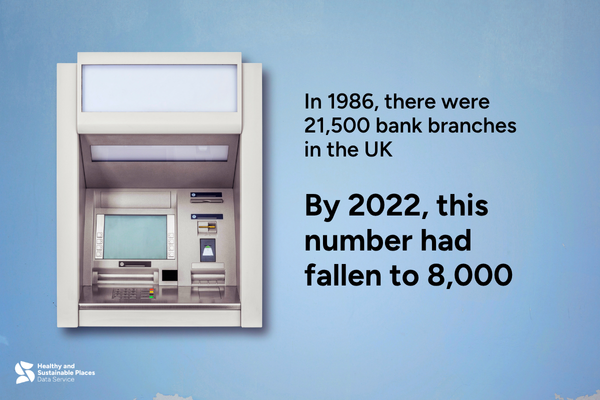
In 1986 there were 21.5k bank or building society branches in the UK, however by 2022 this number had fallen by nearly two-thirds to just over 8000.
The more recent reductions in branches has been driven by changing patterns in the desire or need to conduct transactions face-to-face (cash deposits/withdrawal, paying bills and setting up payments), with online banking and app-based services being promoted to customers by banks.
There are, however, concerns that this move has the potential to disadvantage certain sections of society, including those who use cash payments to manage on a strict budget or who are less tech savvy. To understand the potential impacts of the changing banking landscape we conducted a study of the factors that influences bank branch closures using open data from the location analysis company Geolytix.
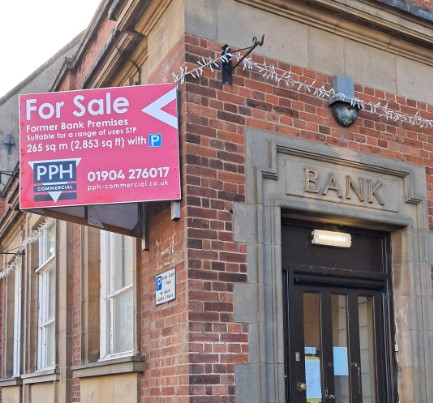
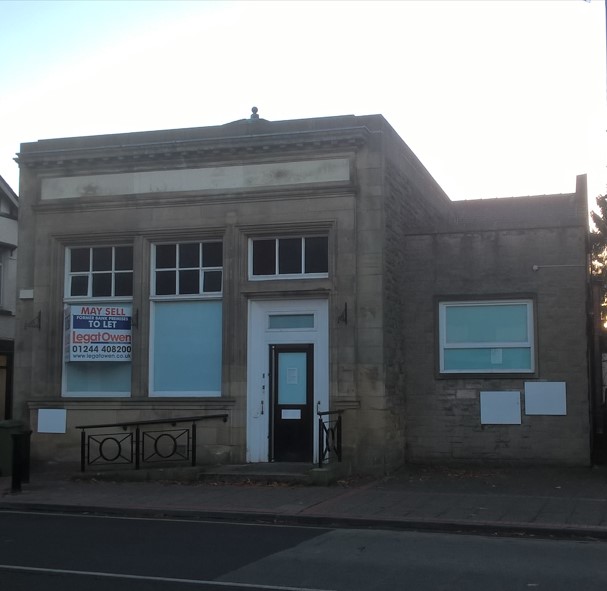
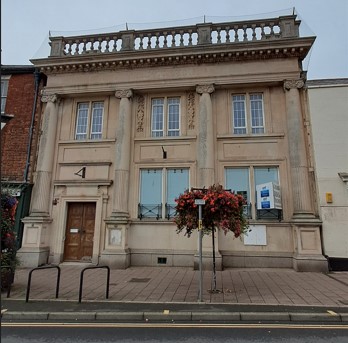
📷 images of closed banks across the UK courtesy of Dr Andy Newing
We found that the likelihood of closure varied by the brand, with mutually owned building society branches being less likely to close. The brands with the greatest risk of branch closure were Yorkshire Bank, Clydesdale Bank and The Co-operative Bank. For types of neighbourhoods in which the branches were located, branches in London, the Core Cities and Larger Towns were least likely to close, but those in Small Towns and Villages were more likely.
Using an Output Area Classification1, for residential types, Inner City Cosmopolitan and Multicultural Living neighbourhoods were the least at risk of closure, but those that were in Suburban Living and Countryside Living areas were more likely.
For Workplace types, Retail locations and Servant of Society locations were least likely to close whilst Manufacturing and Distribution and Metro Suburbs were most likely to close.
We also found some distance effects, if an alternative branch with the same bank was far away, or the Post Office (an alternative source of basic over the counter banking activity) was far away, then the branch was less at risk of closing. If there was a competitor branch close by then the risk of closure was also reduced.
Studies of earlier time periods showed that the more deprived locations were at increased risk, but now we find that it is more affluent, suburban locations that are at increased risk of closure.
As these early studies have shown, branch networks in deprived neighbourhoods have already been rationalised by all banks and there is potentially no further commercial benefit to be gained from closure, or more starkly, there are very few branches left to close in such locations. Finally, we find no evidence that banks try to avoid being the last bank in a community, even though this may place social and political pressure on the branch to remain open, providing essential community services.
Disappearance of ATMs
The above study paints a varied and rather sobering picture of withdrawal from the high street by banks, and this is also reflected somewhat in the reduction of access to cash via ATMs.
The number of ATMs was at its peak in 2015, with over 70k machines available, but in just under a decade this number had fallen to 49k by 2023, with 38k being free-to-use and 11k fee-paying.
In our second study we used a floating catchment area technique to measure the accessibility of the free-to-use ATM network in June 2021 and see how this has changed over the following three years. We also examined what impact there would be if all the fee-paying ATMs were made free-to-use.
We were encouraged to find a positive ‘care-law’ where more deprived neighbourhoods had better access to ATMs, which is important if households are to rely on the use of cash to help them budget.
Unsurprisingly access was best in urban conurbations, and poorer in rural locations. Looking at time trends, while there was a general reduction in accessibility by June 2024, this reduction was felt equally in all neighbourhoods, with no particular type of neighbourhood coming off worst.
One interesting finding is that the LINK organisation, which operates the ATMs, has a Financial Inclusion Program (FIP) that aims to maintain ATMs in disadvantaged and rural communities, and we find it has largely achieved its objectives. Whilst accessibility is not especially good in such FIP neighbourhoods, we find that over the three years of this study, the accessibility for FIP neighbourhoods has largely been maintained, and not decreased, as was found more generally.
What of the future?
It is perhaps inevitable that in the near future bank branches will continue to close and it is likely that eventually all neighbourhoods will be impacted.
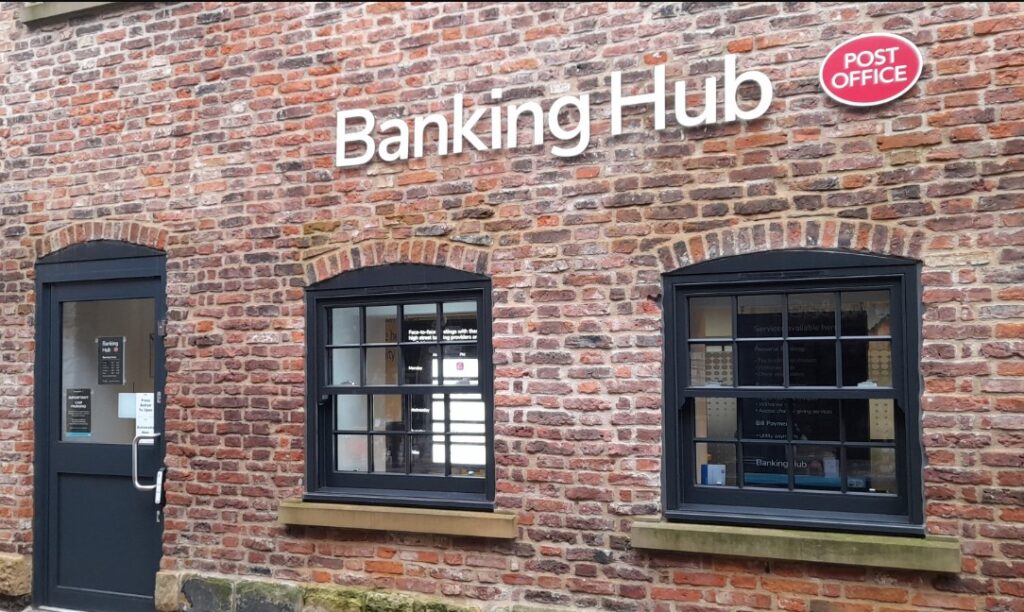
Possible solutions are in place, however. There are arrangements with the Post Office, with its extensive and stable network of 11.5k outlets, to provide basic banking services to all bank customers. Shared Banking Hubs have also been established in communities where the last bank branch has closed, with 230 Banking Hubs expected to be operational by the end of 2025.
Nevertheless, hubs have not opened at the rate at which branches have closed.
For ATMs the solutions are less clear. Our finding that an overnight conversion of fee-paying ATMs to free-to-use would act as a stop-gap but would not address any inequity in access to cash. Before ATMs became widespread, many shops would offer ‘cashback’ where customers could obtain cash at the time of a transaction, with the cash being added to their bill. The introduction of government legislation to protect access to cash has included a commitment to maintain cashback, including introduction of ’cashback without purchase’ at many retailers, which could considerably enhance access to cash.
With thanks to Prof Mark Birkin, Dr Stephen Clark, Dr Chris Duley, Dr Nick Hood and Dr Andy Newing for their contribution to this article.
- such classifications are designed to highlight differences in the social and economic structure of communities at the neighbourhood level ↩︎